World Cup 2026
CAF’s AFCON Title Decision Sparks Legal Controversy Over Laws of the Game
The decision by Confederation of African Football (CAF) to strip the Senegal national football team of their 2025 AFCON title and award it to Morocco national football team has triggered major controversy across the football world.
At the center of the debate is whether CAF’s ruling aligns with the official International Football Association Board Laws of the Game—or directly contradicts them.
CAF’s Controversial Ruling
CAF’s Appeal Board acted on a complaint from the Royal Moroccan Football Federation, citing Articles 82 and 84 of AFCON regulations.
The ruling punished Senegal for a 15-minute walk-off protest during the final by awarding Morocco a 3-0 administrative victory, effectively overturning the original result.
This unprecedented move has raised serious legal and sporting questions.
Conflict With the Laws of the Game
Critics argue that CAF’s decision clashes directly with Law 5 of the IFAB Laws of the Game, which grants full authority over match decisions to the referee.
According to IFAB rules:
-
The referee’s decisions on match events are final
-
The outcome of a completed match cannot be altered by external bodies based on on-field events
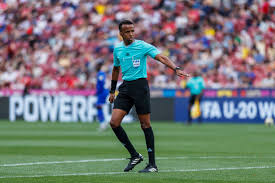
In this case, referee Jean-Jacques Ndala allowed the match to continue after the protest, ultimately concluding the game with Senegal winning 1-0.
Because the match was completed and officially recognised, critics argue that CAF’s later intervention overrides the referee’s authority, which may violate the foundational rules of football.
Questions Over CAF’s Authority
Further controversy arose after journalist Osasu Obayiuwana revealed that a former CAF Appeals Board member questioned the legality of the decision.
According to the source, the Appeals Board may not have the jurisdiction to overturn on-field decisions, particularly when a match has been completed under the referee’s supervision.
Senegal’s Legal Pathway
The Senegalese Football Federation is now expected to challenge the ruling at the Court of Arbitration for Sport (CAS) in Lausanne.
At CAS, Senegal could argue that:
-
The match was legally completed
-
The referee’s decision is binding under IFAB rules
-
CAF exceeded its authority by imposing a post-match forfeit
If successful, Senegal could have the decision overturned and reclaim their AFCON title.
A Landmark Case in African Football
This dispute could set a major precedent for how football governing bodies handle on-field decisions versus administrative rulings.
If CAS sides with Senegal, it would reinforce the supremacy of the Laws of the Game and limit the ability of governing bodies to retroactively alter match outcomes.
For now, the controversy continues to dominate African football, with the final verdict likely to have lasting implications for the sport. ⚽




Cristian Romero to Manchester United? Red Devils preparing ambitious move for Tottenham captain

Kieran Trippier joins Wolves on free transfer after Newcastle exit as Rob Edwards lands major summer signing

Will Neymar be fit for the World Cup? Brazil issue encouraging injury update after latest scan

Kylian Mbappe insists he’s ‘saving’ goals for World Cup as Michael Olise steals spotlight with hat-trick for France

Darwin Nunez offered shock Liverpool return after Al-Hilal exit leaves striker available on free transfer

Top referee denied entry to USA and set to miss World Cup in stunning immigration controversy
-

 Local News3 days ago
Group Queries NFF Credibility, Neutrality On Federation Cup
-
Local News2 days ago
VI Foot Ijora, Fortune FA Set for JOF U-13 Cup Final Showdown
-
 Transfers22 hours ago
Kieran Trippier joins Wolves on free transfer after Newcastle exit as Rob Edwards lands major summer signing
-
 Transfers22 hours ago
Cristian Romero to Manchester United? Red Devils preparing ambitious move for Tottenham captain
-
 Transfers23 hours ago
Darwin Nunez offered shock Liverpool return after Al-Hilal exit leaves striker available on free transfer
-
World Cup 202623 hours ago
Kylian Mbappe insists he’s ‘saving’ goals for World Cup as Michael Olise steals spotlight with hat-trick for France
-
World Cup 202623 hours ago
Will Neymar be fit for the World Cup? Brazil issue encouraging injury update after latest scan
-
 World Cup 202623 hours ago
Top referee denied entry to USA and set to miss World Cup in stunning immigration controversy