
LaLiga
Rebel United: How Gerard Piqué Became a Controversial Spanish Icon
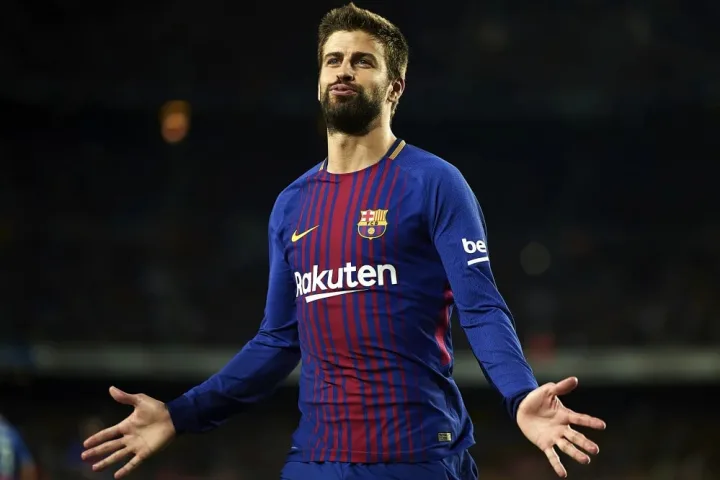
“It was the toughest game,” Gerard Piqué said after Barcelona’s 3-0 win over Las Palmas in October 2017. But it wasn’t the football that made the day difficult — it was the politics.
Earlier that morning, Piqué had voted in the Catalan independence referendum, a moment that defined not only his identity but his career beyond football. “I am and feel Catalan, today more than ever. Voting is a right that must be defended,” he said, tears in his eyes.
That same day, the Camp Nou stood empty — the match was played behind closed doors as chaos unfolded outside. Spanish police clashed violently with voters, trying to suppress what the government deemed an illegal referendum.
The Face of a Movement
Nearly 90% of voters supported independence, but Spain’s government refused to recognise the result. For Piqué — proud Catalan, yet also a Spaniard — it was a painful moment.
He had spent weeks urging Catalans to vote, becoming one of the faces of the independence movement. But his activism came at a cost. During Spain’s national team training, he was booed relentlessly. Signs read “Piqué, get out.” The session was abandoned after just 20 minutes.
Between Two Worlds
The day before, Piqué had offered to resign from the Spanish national team. Coach Julen Lopetegui refused.
“I’ve been playing for Spain for almost 10 years now. I’m not going to disappear through the back door,” Piqué said later. “We footballers are global figures — we can’t take sides. Dialogue is the only way forward.”
But the tension was undeniable. Inside La Roja’s camp, he often felt like an outsider — a Catalan in a Spanish team dominated by Real Madrid players. The rivalry ran deep, both politically and personally.
A Symbol of Resistance
“Every victory against Real Madrid is symbolic,” Piqué said after a 2019 El Clásico win — a remark that summed up how football, politics, and pride intertwined for him.
His relationship with Sergio Ramos epitomized that divide. “I defend my colours, he defends his,” Ramos once said. “When we defend Spain, we do it together — but don’t expect me to hug him after a Clásico.”
Despite their differences, the pair anchored Spain’s defence through its golden era — winning the 2010 World Cup and Euro 2012.
From La Masia to Legend
A product of Barcelona’s famed La Masia academy, Piqué left for Manchester United at 17 but returned home in 2008. Under Pep Guardiola, he became a pillar of one of football’s greatest dynasties — winning multiple Champions League and La Liga titles.
Beyond the Pitch
Today, Piqué represents more than just football. He’s a symbol of Catalan pride, a tech entrepreneur, and a voice unafraid to challenge convention. Love him or hate him, Gerard Piqué’s legacy stands as proof that some players are destined to be more than just athletes — they become movements.



NNL Commends Imo State Governor, Uzodimma Over AGM

After Glasgow 2026 Feat: Tinubu’s Aide, Adeboye, Tips Team Nigeria As Potential Sports World Champions

Barcelona under RFEF investigation after Atletico Madrid complaint over Julian Alvarez pursuit

Chelsea wonderkid Nelly Las aiming to surpass Lucy Bronze after dream summer move

Real Madrid plot Franco Mastantuono loan as Serie A trio battle for Argentine wonderkid
