Sportsmoney
The €52m-plus cost of Man Utd going out of the UEFA Champions League
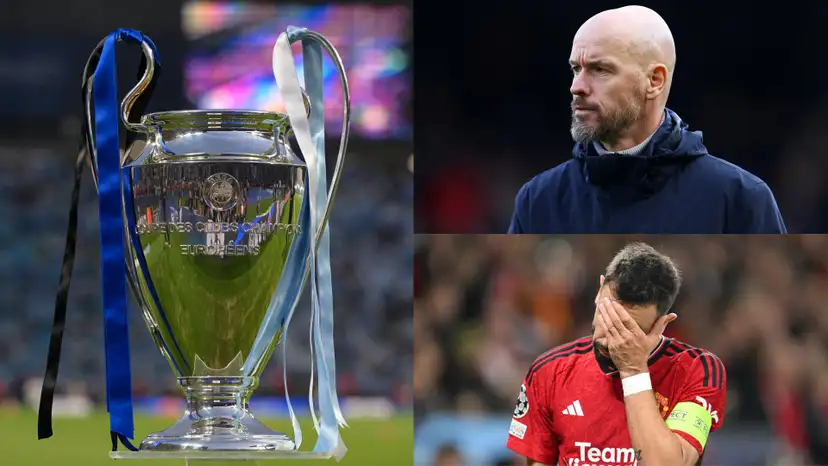
Manchester United had missed the sound of that familiar and stirring anthem, but just three months after returning to the Champions League, the Red Devils look to be heading for the exit door far sooner than they had imagined.
After a series of games that have been highly-entertaining for neutrals but unbearable for fans, Erik ten Hag’s side need a miracle on Tuesday to avoid leaving European football’s biggest party early. Not only do United need to win their final Group A match against Bayern Munich – who have not lost a group game for more than six years – they need to pray for a draw in the other game between Copenhagen and Galatasaray, where both sides will be desperate to win to make it through to the last 16 themselves.
It is a tall order, but United only have themselves to blame for getting into this predicament after winning just one of their five matches and conceding a remarkable 14 goals in the process, leaving them bottom of a group they would have expected to comfortably finish second in.
And if they are unable to pull off a miraculous escape act, they stand to lose out on considerable amounts of money as well as a significant blow to their prestige. GOAL counts the real cost of the Red Devils bowing out of the Champions League this week…
Missing out on prize money
United will have to ready themselves for an initial hit of €9.6m (£8.2m/$9.m) in prize money for failing to make the last 16, and also forgo the other bonuses that come when progressing further in the competition: €10.6m (£9.1m/$11.4m) for reaching the quarter-finals, €12.5m (£10m/$13m) for the semi-finals, €15.5m (£13.3m/$16.6m) for finishing runners-up and €20m (£17m/$21m) for winning the competition.
That’s a maximum of €52.7m (£45m/$56m), even if it were highly unlikely that Ten Hag’s chaotic side were ever going to win the Champions League. But they did reach the quarter-finals in both 2014 and 2019, so a more realistic figure of €20.2m (£17m/$21m) could have been on offer. To put it another away, enough to buy a Manuel Akanji or a Tyrell Malacia…
Fewer matches equals less money
United would also miss out on big money-spinning matches in the knockout rounds. According to the Sports Journal, United made an average of £3.96m ($4.9m) per Premier League match in 2022 – more than any other side in the English top-flight – and that figure will be £4.2m ($5.2m) this season after the club raised ticket prices by 5 percent.
If United were to be drawn against a colossal club like Real Madrid or Barcelona in the last 16, the figure would be higher still. So that’s a potential £12.6m ($15.8m) at least in matchday revenue that could be secured if United go as far as the semi-finals.
The club could recoup some of that money if they drop into the Europa League, which also contains an extra match in the play-off round, although demand for tickets is likely to be lower, as would the prices of those tickets, unless they draw a top-level opponent like Liverpool in a later round.
Less broadcast revenue
United will also earn less television money if they exit the competition early. UEFA offers a total of €300m (£257m/$323m) in broadcast revenue which is distributed to each federation based on the value of their television market.
The English broadcast deal is the biggest, so Premier League clubs are entitled to more money than their counterparts. United have already secured half of this amount, but the other half is paid out in proportion to how many matches each club pays.
So if Ten Hag’s side exit at the group stage, they will get a far smaller slice of the cake than if they had gone deep into the competition.
Sliding down the coefficient table
An additional €600m (£515m/$646m) is shared among clubs according to their UEFA coefficient, which is calculated over 10 years and based on performance in European competitions. The lowest-ranked team earns €1.1m while the top team is awarded €36.4m.
Real Madrid currently lead the coefficient standings, followed by Bayern Munich and Barcelona. United are ranked 11th, with Man City fourth and Liverpool eighth.
Last season, Chelsea were ranked highest of the English clubs (they are now positioned sixth) and pocketed €32m. Tottenham, ranked lowest of the English clubs, took €19m. Should United exit the competition and also miss out on the Europa League, then they could slide down the rankings, although their relatively strong performances in the Europa League and Champions League in previous seasons mean they will not make a considerable loss. But it all adds up.
Increased financial pressure
The sums might not seem catastrophic given United posted a record revenue of £648m ($813m) last season, but the club are not exactly in rude financial health. They made a loss of £27.8m ($33m) this year and a £115.5m ($144m) loss the previous year, although that was largely due to the Covid-19 pandemic.
They continue to sail close to the wind with regards to both the Premier League’s profit and sustainability rules and UEFA’s financial fair play regulations, falling foul of the latter in June and being forced to pay a €300,000 fine. The club have done a particularly bad job of selling on players, especially compared to their rivals, bringing in just €110m in sales over the last three years while spending €589m on new arrivals.
In other words, they need all the revenue they can get, and the loss of Champions League earnings will put the club’s finances under more pressure.
No longer a top club?
Since Sir Alex Ferguson’s retirement in 2013, United have only managed to reach the quarter-finals of the Champions League twice. They have been knocked out in the last 16 twice and failed to even qualify on four occasions. If they fall short on Tuesday, it will be the third time they have been knocked out at the group stage.
It is not the track record of a top club and pales in comparison to the consistency of Bayern Munich, Real Madrid, Barcelona, Manchester City and even Liverpool, until they failed to qualify last season. United still see themselves as among the top clubs in the world, but another hugely disappointing showing in the most prestigious competition will mean they will be the only ones to think so.
Jude-Bellingham(C)GettyImages
Overlooked by the best players
United’s failure to compete properly in the Champions League inevitably means they are struggling to attract the best emerging players. The club failed to convince both Jude Bellingham and Erling Haaland to join as youngsters, and once both players were established stars at Borussia Dortmund and looking for their next move, United weren’t even in the conversation.
The Red Devils can still pay top wages, but they are struggling to attract real elite players at the peak of their powers. Casemiro and Raphael Varane may have joined from Real Madrid, but that was only once the Spanish giants had concluded they were past their best and wanted to cash in on them.
The best players not only want a guarantee of playing in the Champions League, they want to have the best chance of lifting that coveted trophy. And United cannot offer them either at the moment.



Cristiano Ronaldo Sends Emotional Message to PSG Star Khvicha Kvaratskhelia After ACL Injury

Facundo Bernal Handed Four-Match Ban After Explosive Clash With Lamine Yamal

David Raya Opens the Door to La Liga Move as Arsenal Future Remains in Focus

Alejandro Garnacho’s Aston Villa Move in Doubt as Chelsea Grow Frustrated Over Lack of Game Time

Khvicha Kvaratskhelia Set for Surgery After ACL Rupture in PSG’s Win Over Barcelona

Delta NIPR Presents Outfits to State Contingent Ahead of WPRF 2026 in Abuja
-

 Uncategorized2 days ago
El Clasico to Feature Up to 40 Cameras Tracking Lamine Yamal and Kylian Mbappe
-
 Bundesliga2 days ago
Martin Demichelis Emotional Tribute to Lionel Messi: ‘He Will Be Missed!’
-
Manchester United2 days ago
Erik ten Hag Hits Out at Man Utd Board Over Scott McTominay Transfer Promise
-
Barcelona2 days ago
PSG Prepare for Barcelona Showdown as Luis Enrique Targets Champions League Victory
-
Liverpool2 days ago
Liverpool Face £50m Price Tag for Trent Alexander-Arnold Return as Real Madrid Future Comes into Question
-
Arsenal2 days ago
Arsenal Lack Attacking Stardust but Remain Premier League Title Favourites, Says Carragher
-
Chelsea2 days ago
Morgan Rogers Reveals Why Joao Pedro Is Taking Chelsea’s Attack to the Next Level
-
Barcelona17 hours ago
Luis Enrique Reveals How PSG Outclassed Barcelona in Champions League Thriller