
Local News
WAFCON 2024: Ghana Vs South Africa Battle For Bronze
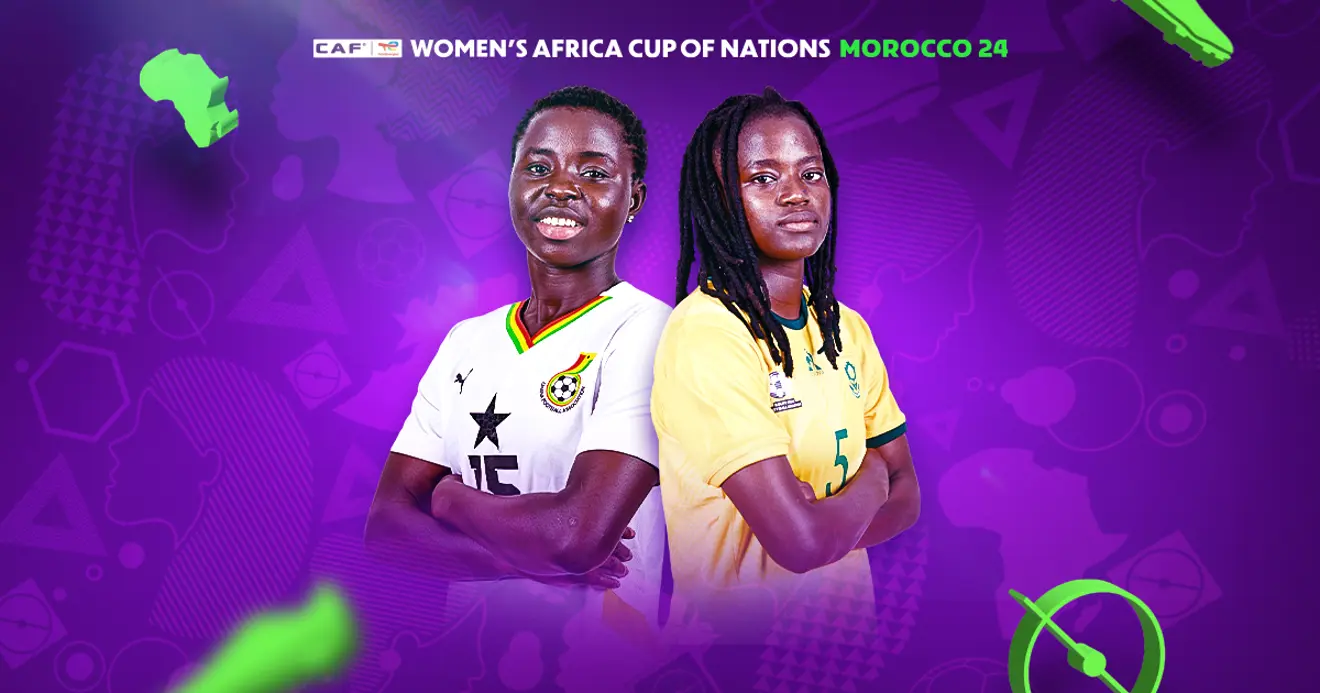
The 2024 CAF TotalEnergies Women’s Africa Cup of Nations (WAFCON) third-place match will bring together two of the continent’s fiercest rivals South Africa and Ghana in what promises to be a gripping finale under the lights of Casablanca.
Set for Friday evening at the Larbi Zaouli Stadium, the encounter will not only determine who claims the bronze medal but also settle a score dating back to 2016, when Ghana edged South Africa 1–0 to finish third in Yaoundé.
Now, both teams return to the same stage with a shared objective, which is to finish strong and restore pride after falling short of the final.
Banyana Banyana: Champions with a Point to Prove
For South Africa, the pain of missing out on consecutive WAFCON finals has ignited a resolve to leave Morocco with something tangible.
As reigning champions, Banyana Banyana carry the weight of expectation and the responsibility of showing resilience in a tournament that has tested their depth and character. Head coach Desiree Ellis acknowledged the disappointment but emphasized the need to reset quickly amidst challenges of nurturing new talent.
“Obviously, the ambition was to play in the final, but that didn’t happen. We now focus on playing Ghana, another tough team. Though this is not where we wanted to be, we must regroup and fight for a bronze medal,” she said.
“We’re looking forward to seeing how our young players grow. They’ve been auditioning for years—it’s now time to step up.” South Africa striker Jermaine Seoposenwe echoed the team’s mindset heading into the clash.
“As professionals we must take responsibility. As African champions, going home with a medal is a form of consolation. A bronze medal is what we must now win.”
Having played as a makeshift striker in this tournament, Seoposenwe suggested this may be her final WAFCON appearance. “As for retirement, it’s a big decision and not one I want to be talked out of once I make it. For now, the priority is to end this campaign with a win.”
Ghana’s Black Queens: Underdogs with Momentum
In contrast, Ghana have embraced their role as tournament dark horses.
Under Swedish tactician Kim Björkegren, the Black Queens have mounted an inspiring run — reaching the semi-finals after failing to qualify for the last edition.
“We lost to South Africa 2-0 in the group stage, but it was a close, 50-50 game,” Björkegren said.
“Since then, we’ve improved a lot. When I came in February, the team hadn’t been together much. But the players are learning quickly and showing real growth.”
Blending international experience with domestic grit, Ghana have leaned on rising stars like Comfort Yeboah and Stella Nyamekye to drive their progress.
“We’ve prepared like we were preparing for the final,” said Nyamekye. “The senior players have been a big support for us younger ones. We want to win this for them and for Ghana.”
Head-to-Head: A Rivalry Revisited
This bronze medal match will be the second meeting between Ghana and South Africa at WAFCON 2024. Their earlier encounter in the group stage saw Banyana Banyana claim a 2–0 win, but the stakes are significantly higher now with a podium finish on the line.
Historically, the rivalry between the two sides has been intense and evenly contested, with each nation enjoying moments of dominance over the other across the years.
Their first meeting at the Women’s Africa Cup of Nations came in the 1998 group stage, where Ghana outclassed South Africa with a 4–0 victory. Two years later, South Africa responded in the 2000 semi-final, edging the Black Queens 1–0 to reach the final. In 2004, Ghana again showed their superiority in the group phase with a 3–0 win, but South Africa struck back in 2008 with a 1–0 triumph during the group stage.
The 2006 edition saw Ghana book a spot in the final after defeating South Africa 1–0 in the semi-final. Outside of the WAFCON, both teams played to a 1–1 draw in a 2012 international friendly, and again in 2014 during the WAFCON group stage in Namibia.
In their most recent WAFCON knockout encounter, Ghana defeated South Africa 1–0 to clinch third place at the 2016 edition in Yaoundé. However, South Africa won a preparatory friendly 3–0 in 2021 and followed up with the group stage win at the ongoing WAFCON tournament.
In total, the two sides have faced off 10 times across competitive and friendly fixtures. Both Ghana and South Africa have recorded four wins apiece, while two matches have ended in draws. With the head-to-head perfectly balanced, Friday’s encounter in Casablanca will not only decide who leaves with the bronze medal but also tip the scale in one of the fiercest rivalries in African women’s football.
Players to Watch
South Africa’s Jermaine Seoposenwe – The veteran attacker has led from the front in an unfamiliar striker role. Her vision, movement, and leadership will be central to Banyana’s attacking transitions.
South Africa’s Linda Mothalo – A bright spark in midfield, the youngster has impressed with her composure on the ball and tactical awareness, offering both creativity and control.
South Africa’s Karabo Dhlamini – Solid and composed in defence, Dhlamini’s ability to break up play and initiate build-ups from the back makes her key to South Africa’s structure.
Ghana’s Grace Asentawaa – The midfield orchestrator has been Ghana’s heartbeat, dictating tempo and providing incisive passes in the final third.
Ghana’s Stella Nyamekye – Energetic and fearless, Nyamekye’s dribbling and flair could prove vital against South Africa’s backline.
Ghana’s Comfort Yeboah– A versatile and tireless fullback, Bugre’s overlapping runs and defensive tenacity offer Ghana width and steel on the flank.
Kickoff is scheduled for 8:00 PM local time on Friday at the Larbi Zaouli Stadium. With a medal and regional bragging rights on the line, expect a fiercely contested match driven by redemption and ambition.
Ghana want to recreate the 2016 bronze moment, while South Africa want to show they’re still top force with sights on legacy, pride, and a place on the podium.
Cafonline.com




Man Utd Push for Chido Obi Loan Move to Willem II Before Eredivisie Deadline

Chelsea Suffer Shock as Monaco Cancel £42m Lamine Camara Transfer

Dwight Yorke Urges Arsenal to Sign Victor Osimhen for Premier League Title

River Plate to Receive €5m From Enzo Fernandez’s Manchester City Transfer

Ahead FIFA U20 Women’s World Cup: Korea Republic Force Falconets To 1-1 Draw
