
European Leagues
£10m For A Month Of Alexander-Arnold Exposes Absurdity Of CWC
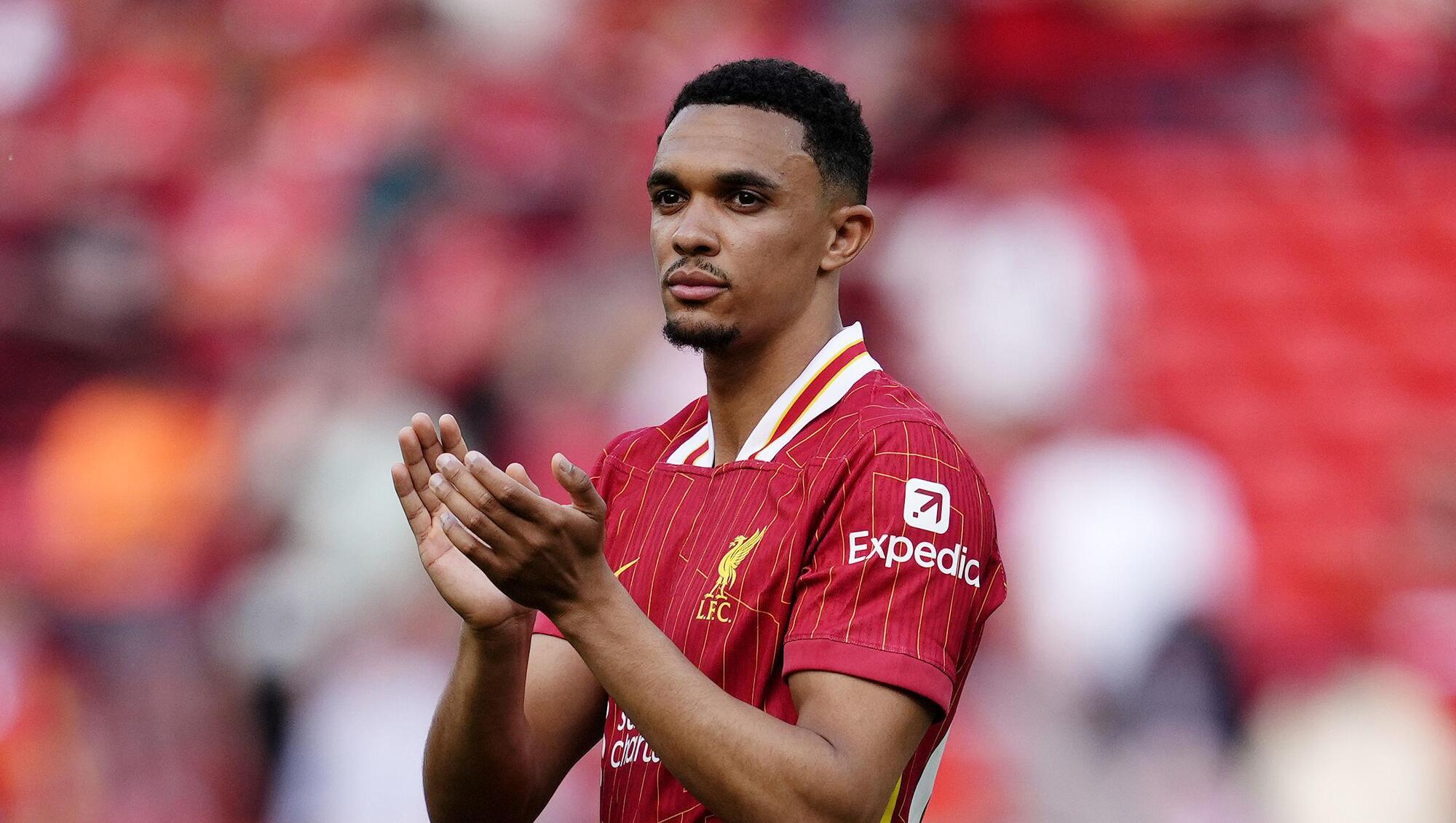
The first piece of mini-transfer window business is a significant moment for Fifa’s Gianni Infantino and his heinous creation
Hmm. Ten million pounds. What does that work out to in booing, and boo-deletion? What’s the exchange rate here? How much un-booing does £10m (€12m) get you, in a highly emotive run‑your‑contract-down local‑lad‑departure scenario?
This and many more equally strange questions will presumably have to be debated now Real Madrid have agreed a small but significant early release payment for Trent Alexander-Arnold, which will in turn allow his participation at the most heinous footballing entity yet devised, the new Fifa Club World Cup.
The whole thing seems less important now. The Trent-Exit saga was something to talk about because the league was done. Time moves on, often in deeply strange ways. For what it’s worth, I for one had no issue at all with some Liverpool fans barracking when they realised their favourite player was going to leave for free at the end of his contract. That is, I could see it was illogical and irrational. The answer to which is, duh. Meet: football.
This is how the game survives, why absurd amounts of money swill across its decks every day, why the good stuff about connection and collectivism and moments of beauty can also happen. If we all just sat around taking the rational view and refusing to Become Emotional the whole thing would last about three minutes before everyone cleared their throats, looked at their watches and walked off to do some more sensible activity, like picking up litter or preserving hedgehogs.
For now Madrid in the mini-window feels like a good thing for everyone. Good for Trent, who is 26, who had those luminous, oddly distant years under Jürgen Klopp, the most creatively brilliant piece of elite tactical freedom in recent times, the invention of a highly new effective role, the flank-libero, the walk‑cross man, the assist-mooch king.
Liverpool aren’t really a Trent team in the more orderly champion era. Whereas Real Madrid remain an oddly formless entity, a divvying up of roles, super‑strengths, star-freedoms. Madrid want him to play full-back but also to act as a rewilding element, a recreation of the Kroos-era passing range, which already sounds like a recipe for a dreamy kind of chaos.
So it’s good for the neutral too, good for the basic sounds and colours, the mouthwatering story arc of Trent inside that deeply vicious media‑superstar complex. This is a footballer who will always be an object of confusion, whose passing is brilliant, sui generis and thrillingly odd in its angles, but who continues to wander about the pitch like a man trying very hard not to spill his Pot Noodle.
Mainly, though, this is all very good for the Club World Cup, which is of course the real story here. And at bottom this is a Fifa story, the first significant act of the CWC 2.0, a first hum of the destructor ray for this strange new source of gravity.
Most immediately, it brings us one step closer to the prospect next month of a mouthwateringly inane Madrid-al-Hilal Trent-Ronaldo celebrity face-off, the descent on the Hard Rock Stadium of a vast ant colony of weeping superfans, lookalikes, holy relic seekers and confused adolescents who really do appear to spend their days poring over the weirdly robotic CR7 Instagram feed as though communing with some plasticised ideal of show, gloss, nature-less acquisitiveness. So, there’s that.
Otherwise, being good for the CWC is an issue for anyone who loves the game in its existing form. Because this competition is not just a sporting abomination, a skewer of leagues, a force for stratification with its vast and destabilising income stream for the top clubs, but a kind of top-down heist.
Above all, the first significant piece of mini-window business is a wonderful moment for Gianni Infantino, because this really is Infantino’s baby, gestated, midwifed into being and now clasped, damp and slithering, to the Fifa president’s chest through the Trump-centred brand building of the last few months.
There is no secret about any of this. The Club World Cup does not need to exist. It is in effect a one-man reordering of the global calendar, a product of Fifa’s unique style of government whereby a single random Swiss man is given an autocratic degree of power over the global game.
Infantino even looks at times as if he can’t quite believe how this thing has happened to him, staring out at the world with those flat, startled eyes, as though there is actually another man inside this man, encased in some compacted substance, a blend of processed ham, varnish and mendacity, mummified into a man-shape, squeezed into a blue suit and given the keys to the world.
And now we have this, a competition that exists solely because Infantino wants access to the funds currently being harvested by club football. It fails on a basic level of sporting robustness. This is an invite-only star fest, a financial grenade chucked into every league in the world, and something Fifa has no real mandate for.
Here we have the game’s keepers acting with entrepreneurial self-interest, creating not just a competing format, but a competing way of perceiving the sport, a setup that invites only the biggest clubs, and marketing a vision of the game as a kind of star‑driven celebrity circus, sold through the social media feeds of its star players.
Why would the clubs go along with this? The obvious reason is that interestingly sourced $1bn prize fund, the first chunk of which is now on its way to Liverpool. But it isn’t just greed. There is a more subtle energy in play here, a coincidence of Infantino’s ambition and the dynamic of football’s new breed of owners.
Todd Boehly gave a significant speech at the recent Financial Times Football Leaders conference. Despite giving the appearance of having been sedated shortly before taking the stage, Boehly kept turning to two key themes. First, the urge to create out of football’s global cut-through some kind of future streaming platform, a tech behemoth, which is where the real Zuckerberg money is, not mucking about with Kiernan Dewsbury-Hall’s sell-on value.
And second, his bafflement with football’s existing culture, its fan-based conservatism. Football wants to grow, to dig its teeth into the wider global market. This is the real key to the Club World Cup, and it speaks again to Trent, to extreme, irrational loyalty, to geographical ties, to all those elements that lasso this thing into its existing shape.
The Club World Cup is the first competition where it makes little difference if you boycott it or simply don’t watch. It’s not about getting you to like it. It’s about power and ownership, driven by broadcasting money that exists outside normal market rules, that is basically a bribe to the clubs.
It is instead about the dissolution of those old bonds, of the ties to physical place, about players as mobile marketing tools, teams not as mobile brands. It wants you to like it enough to subscribe and click, but not to feel any sense of obstructive ownership.
This is also why the booing matters. Booing at least makes sense, speaks to those old sustaining structures, the link to place, colours, family, something that is the opposite of pop-up moves and individualism as a Fifa sales technique.
It will be impossible to ignore this thing, to no-platform it, because it’s already here, already eating away at the ground beneath football’s feet. And who knows, in time Trent to Real Madrid in the mini-window might come to look like a first step, an Archduke Franz Ferdinand moment, the day the world shifted just a little on its axis.
Irishexaminer.com



Jadon Sancho Faces Key Questions After Manchester United Exit

Southampton Face Fresh Spygate Hearing as Tonda Eckert Is Charged

Erling Haaland Breaks Manchester Derby Goalscoring Record
Enzo Maresca Reveals Erling Haaland Is Key to Man City Project

Why PSG Are Wearing Two Stars Above Their Badge This Season