More Sports
Daria Kasatkina Ends Season Early: The Breaking Point of Tennis’ Grueling Calendar
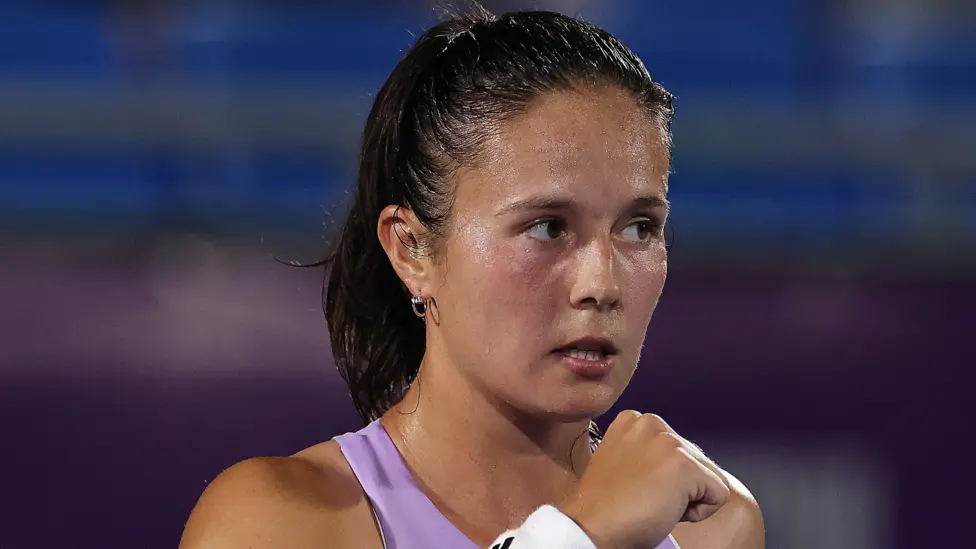
World number 19 Daria Kasatkina has announced the end of her 2025 season, admitting she has reached “breaking point” after a draining year on and off the court.
The 28-year-old, who switched nationality from Russia to Australia earlier this year, revealed that the combination of emotional stress, heavy scheduling, and personal challenges has left her with no choice but to step away.
A Season of Struggles
Kasatkina endured one of the toughest seasons of her career, finishing with a 19-21 record and failing to win a single title. In a heartfelt statement, she acknowledged that the emotional toll of her nationality change—including being separated from her father for four years—had a major impact on her performances.
“I’ve been far from fine for a long time and, truth be told, my results and performances show that. I am at breaking point and sadly I am not alone,” Kasatkina wrote.
“If this makes me weak, then so be it. I know I am strong and will get stronger by being away and recharging.”
Not Alone in Stepping Away
Kasatkina joins a growing list of players ending their seasons prematurely. Elina Svitolina admitted she had “not been feeling like myself,” while Paula Badosa cited the mental toll of chronic injury struggles.
Even at the top of the sport, concerns are mounting. Iga Swiatek has criticized the intensity of the tennis calendar, while Novak Djokovic has long urged players to unite for reform, managing his own career by drastically reducing his schedule.
The Demands of the WTA Calendar
The Women’s Tennis Association (WTA) requires top players to compete in:
-
All four Grand Slams
-
Ten WTA 1000 events
-
Six WTA 500 events
Many of these tournaments stretch over two weeks, creating a relentless grind with little room for rest. Players who skip events lose ranking points and prize money, putting additional pressure on their careers.
The consequences are visible: five players retired injured in just two tournaments in China last week, highlighting the physical and mental strain of professional tennis.
The Bigger Picture
Kasatkina’s honesty sheds light on a growing crisis in tennis. The sport’s relentless demands are forcing athletes to sacrifice not just their bodies, but their mental health.
Her decision echoes a wider truth: even the strongest athletes need time to recover, recharge, and step back. And unless tennis governing bodies seriously rethink the calendar, more players may follow Kasatkina’s path.




TRIBUTE: Goodbye Henry Nwosu

Thierry Henry Coins “Braino Fernandes” After Man Utd Captain Dominates Aston Villa

FIFA Confirms DR Congo Over Nigeria for 2026 World Cup Play-Offs

Akor Adams Credits Super Eagles Experience for Boosting Confidence at Sevilla

Police Conference: Organiser Debunks Funds Diversion Story, Says Sponsors Bankrolled Event Since First Edition

Finalissima Venue Uncertain as Spain Propose Santiago Bernabéu for Argentina Clash
-

 News3 days ago
Police Conference: Organiser Debunks Funds Diversion Story, Says Sponsors Bankrolled Event Since First Edition
-
News10 hours ago
TRIBUTE: Goodbye Henry Nwosu
-
World Cup 202623 hours ago
FIFA Confirms DR Congo Over Nigeria for 2026 World Cup Play-Offs
-
Premier League21 hours ago
Thierry Henry Coins “Braino Fernandes” After Man Utd Captain Dominates Aston Villa
-
Local News24 hours ago
Akor Adams Credits Super Eagles Experience for Boosting Confidence at Sevilla