News
Rising Heat May Force FIFA To Shift World Cup Dates
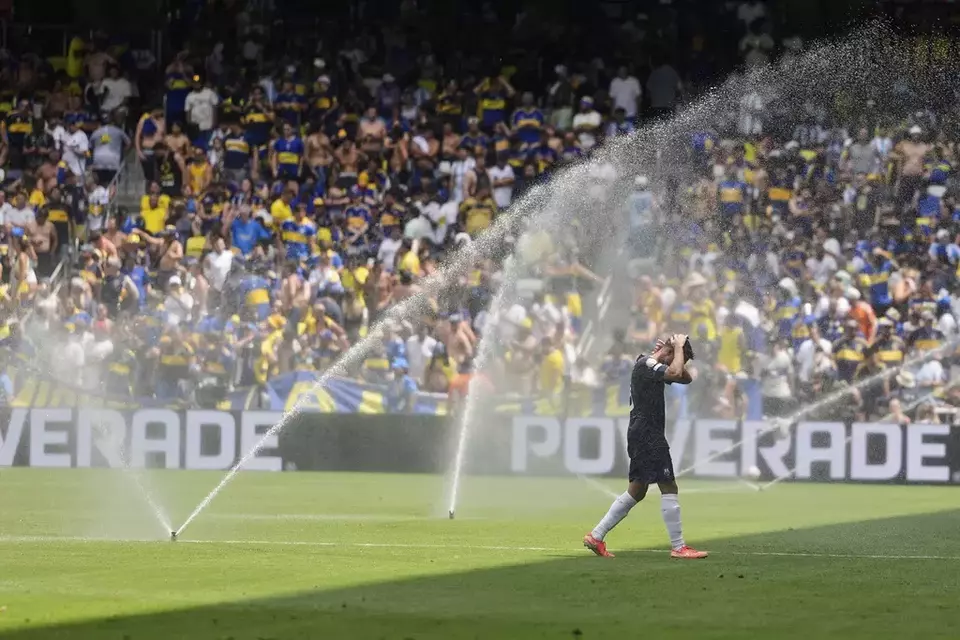
Soccer had a fierce reckoning with heat at the recently concluded FIFA Club World Cup in the United States — a sweltering preview of what players and fans may face when the US co-hosts the World Cup with Mexico and Canada next summer.
With temperatures rising worldwide, scientists warn that staging the World Cup and other soccer tournaments in the Northern Hemisphere summer is getting increasingly dangerous for both players and spectators. Some suggest that FIFA may have to consider adjusting the soccer calendar to reduce the risk of heat-related illnesses.
“The deeper we go in the decade, the greater the risk without considering more dramatic measures, such as playing in the winter months and/or cooler latitudes,” said Prof. Piers Forster, director of the Priestley Centre for Climate Futures in Leeds, England. “I’m getting increasingly worried that we are only one heatwave away from a sporting tragedy, and I would like to see governing bodies lean into the climate and health science.”
Tournament soccer in June and July is a tradition going back to the first World Cup in 1930.
Since then, the three-month period of June, July, and August globally has warmed by 1.05 degrees Celsius (1.89 degrees Fahrenheit), according to the US National Oceanic and Atmospheric Administration. Meanwhile, European summer temperatures have increased by 1.81 degrees C. The rate of warming has accelerated since the 1990s.
Climate scientists say that’s a factor that needs to be considered when playing high-intensity outdoor sports like soccer.
“If you want to play football for 10 hours a day, they’ll have to be the hours of the early morning and late evening,” climatologist Friederike Otto from Imperial College, London, told The Associated Press in an email, “if you don’t want to have players and fans die from heatstroke or get severely ill with heat exhaustion.”
FIFA Adapts
Extreme heat and thunderstorms made an impact on FIFA’s newly expanded tournament for club teams. The Club World Cup was held in 11 American cities from June 14 to July 13.
FIFA adapted by tweaking its extreme heat protocol to include extra breaks in play, more field-side water, and cooling the team benches with air fans and more shade.
Still, Chelsea midfielder Enzo Fernández said the heat made him dizzy and urged FIFA to avoid afternoon kickoffs at the World Cup next year.
The global soccer players’ union, FIFPRO, has warned that six of the 16 World Cup cities next year are at “extremely high risk” for heat stress.
FIFA President Gianni Infantino addressed the heat concerns on Saturday, saying the handful of World Cup stadiums that are covered would be used for daytime games next year.
How Climate Change Could Force FIFA to Rethink World Cup Calendar
Extreme heat could become an even bigger challenge at the following World Cup in 2030, which will be co-hosted by Spain, Portugal, and Morocco. Games are scheduled to be played in the afternoons and early evenings from mid-June to mid-July. All three countries have already seen temperatures rise above 40 degrees C (well above 100 Fahrenheit) this summer.
FIFA downplayed the heat risk in its in-house evaluation of the 2030 World Cup bid, saying “weather conditions are difficult to predict with the current development in global and local climate, but are unlikely to affect the health of players or other participants.”
Heat Exhaustion
The physical effects of playing 90 minutes of soccer in direct sunshine during the hottest part of the day can be severe and potentially result in hyperthermia — abnormally high body temperatures.
“When players experience hyperthermia, they also experience an increase in cardiovascular strain,” said Julien Périard of the University of Canberra.
“If core temperature increases excessively, exertional heat illness can occur,” leading to muscle cramping, heat exhaustion, and even life-threatening heat stroke, he said.
Many sports events held in the summer adjust their start times to early morning or late night to minimize the risk of heat-related illness, including marathons at the Olympics or track world championships. Morning kickoffs, however, are rare in soccer, where World Cup match schedules are often set with European TV audiences in mind.
It would be hard for FIFA to avoid daytime World Cup kickoffs given the packed match schedule as the number of participating teams increases from 32 to 48 in 2026.
Calendar Rethink
Heat mainly becomes an issue when the World Cup is held in the Northern Hemisphere, because June and July are winter months in the Southern Hemisphere.
FIFA has stuck to its traditional June-July schedule for the men’s World Cup, except in 2022 when it moved the tournament to November-December to avoid the summer heat in Qatar. Something similar is expected when neighboring Saudi Arabia hosts the tournament in 2034.
However, moving the World Cup to another part of the year is complicated because it means Europe’s powerful soccer leagues must interrupt their season, affecting both domestic leagues and the Champions League.
When and where to schedule the World Cup and other outdoor sports events is likely to become more pressing as the world continues to warm.
Jakartaglobe.id

News
He Gives Us Energy: William Saliba Hails Mastermind Behind Arsenal’s Defensive Dominance
Arsenal’s defensive dominance in the Premier League has a new driving force behind it, according to William Saliba. The French centre-back has hailed Gabriel Heinze, Mikel Arteta’s new first-team coach, as the mastermind behind the Gunners’ impressive backline.
Since joining Arteta’s staff in July, Heinze has brought his trademark intensity and energy to Arsenal’s training ground, helping a side that has conceded just seven goals in 14 Premier League matches — the best defensive record in the division.
Heinze’s Influence On The Gunners
Speaking to the Men in Blazers Media Network, Saliba described Heinze as a constant presence around the defenders:
“Gabriel Heinze helps a lot, especially the defenders. He gives us energy because he’s always talking, always loud — even in training when we do simple things, he’s always loud. Even for nothing, he will be loud! He talks a lot and it’s good to have him close to us. I think this guy can help us a lot.”
Saliba’s comments paint a vivid picture of Heinze as a demanding coach, whose booming voice and relentless standards lift the entire defensive unit.
Arteta added context to Heinze’s appointment, noting their long-standing friendship and mutual trust:
“He’s a winner. He’s won in many clubs he’s been at. We’ve known each other for 23 years, I’m very close to that. It brings something extra.”
He praised Heinze’s tactical insight and complementary personality:
“We complement each other really well, and everybody brings a different insight, a different character, a different personality, to the table that makes us a much better team.”
A Winning Pedigree
Heinze’s coaching approach is rooted in a winning playing career. From PSG to Manchester United, Real Madrid, and Marseille, the former defender was known for hard tackling and relentless duels. Since retiring in 2014, he’s built a coaching résumé across South America and the U.S., including stints at Godoy Cruz, Argentinos Juniors, Velez Sarsfield, Atlanta United, and Newell’s Old Boys.
Testing Defensive Resilience
Heinze’s influence comes at a time when Arsenal’s defense has been hit by injuries. Key centre-backs Saliba and Gabriel have been sidelined, forcing Arteta to deploy makeshift partnerships like Mosquera, Piero Hincapie, and Jurrien Timber. Despite the reshuffling, Arsenal still secured a 2-0 victory over Brentford, proving the defensive organisation and resilience Heinze has instilled.
Arteta commented on the injury situation:
“He (Saliba) had a little niggle, so I think it’s going to be a matter of days. Big Gabi is doing very well as well, but that’s weeks as well.”
With Heinze bringing energy, intensity, and tactical sharpness, Arsenal’s defensive stability continues to impress, even amid injury crises — a testament to the Argentine coach’s impact on the Premier League leaders.
Want To Advertise With Us?
Reach millions of football fans across Africa.
📩 Contact: sales@ventolitemarketing.com
News
Arne Slot Confirms Mohamed Salah Is ‘Always In My Mind’ Amid Liverpool Absence
Liverpool boss Arne Slot has addressed the speculation surrounding Mohamed Salah, admitting that the Egypt forward is “always in my mind” despite being left out of the last two starting line-ups.
Salah, 33, has had a slow start to the Premier League season, scoring just four goals, and has played only 45 minutes across the last two games. The forward’s omission from the starting XI has sparked talk of a potential Saudi Pro League move, though Salah recently signed a two-year contract extension with Liverpool in April.
Slot Explains Salah Situation
“I think for every player in my mind can start and Mo is an exceptional player for us,” Slot said. “He is always in my mind to either start or to come off the bench.”
Salah played a starring role last season, scoring 29 goals as Liverpool lifted the Premier League in Slot’s first campaign. However, he was an unused substitute in Liverpool’s 2-1 win at West Ham and again came off the bench in the 1-1 draw at home to Sunderland.
Slot acknowledged the chatter around Salah’s absence, saying:
“The chatter, yes because he deserves that, he has been so influential for me and six or seven years. It’s completely normal people talk about it when he isn’t playing.”
Van Dijk Weighs In
Liverpool captain Virgil van Dijk also commented, highlighting that no player at the club has “unlimited credit”:
“He is still a fantastic player and we still have to remember there is a reason why he has been so successful at the club and we have to respect that. I need him around as one of the leaders. He’s disappointed but that’s absolutely normal. It’s always been the case that no one is undroppable.”
This statement underscores the high standards at Liverpool, even for one of their most prolific stars.
Liverpool’s Current Form
The Reds are currently ninth in the Premier League, 11 points behind leaders Arsenal, having won just two of their nine league games. Salah’s presence will be crucial as Liverpool look to regain momentum, with their next game set against Leeds United.
While fans debate Salah’s place in the squad, both Slot and Van Dijk emphasize that he remains central to Liverpool’s ambitions, both on the pitch and in the dressing room.
Want To Advertise With Us?
Reach millions of sports fans across Africa.
📩 Contact: sales@ventolitemarketing.com
News
Roy Keane Blasts ‘Frightened’ Manchester United After West Ham Draw
Manchester United thought they had the job wrapped up at Old Trafford… until they didn’t.
Diogo Dalot’s tidy finish just before the hour mark looked like the moment that would push the Red Devils to a much-needed victory. But in classic 2025 Manchester United fashion, control slipped, intensity dipped, and West Ham pounced.
And of course—when things go wrong—Roy Keane is never far from the verbal action.
“They Weren’t Nasty Enough!” – Keane Fires Shots
After the 1-1 draw, Keane wasted zero time calling out what he sees as the real issue at United: timidity.
According to him, United “took their foot off the gas” right after scoring. Against a team in the bottom three, he expected more authority, more aggression, and definitely more hunger.
Instead, what he saw was a team “almost frightened” of finishing the job.
He slammed the players for hiding when pressure kicked in, criticized their lack of killer instinct, and even called out the relaxed body language during substitutions.
In typical Keane fashion, the message was simple:
United should never be this soft.
Amorim Also Frustrated: “The Game Was Ours To Win”
Manager Ruben Amorim didn’t sugarcoat anything either.
While he didn’t go full-Keane, he admitted:
-
United lost control after scoring
-
They failed to win second balls
-
They should have killed the match earlier
-
The inconsistency is becoming a real problem
For a team chasing European places, three draws in five games simply isn’t good enough.
West Ham Deserved Their Point
To be fair, West Ham didn’t just sit back and wait. They fought, pressed, countered, and eventually got their reward when Soungoutou Magassa slotted home the 83rd-minute equaliser.
United had late chances, but the story of their season resurfaced again:
moments created, moments wasted.
Where Do United Go From Here?
Sitting eighth on the table, United’s inconsistency continues to be their biggest opponent. Keane believes the team lacks bite. Amorim believes the team lacks control.
Fans believe the team lacks… well, everything except drama.
What’s clear is this: until United find their identity and intensity, nights like this will keep happening.
Want To Advertise With Us?
Email: sales@ventolitemarketing.com
-
In The Other News3 days agoDollar To Naira Exchange Rate Today, December 2, 2025
-
Premier League1 day agoArne Slot Explains Bold Salah Decision As Liverpool Drop Points Against Sunderland
-
CHAMPIONS LEAGUE2 days agoChampions League Top Scorers 2025-26: Mbappe, Haaland, Osimhen Lead The Golden Boot Race
-
Premier League5 hours agoManchester United Left Shocked As Late West Ham Goal Snatches Dramatic Draw At Old Trafford
-
Serie A3 days agoDele Alli Sent Trial Warning After Scary Fall From Grace As Ex-Tottenham Midfielder Faces Slim Opportunities
-
LaLiga3 days agoStop the Messi Comparisons: Yamal Faces Dangerous Pressure
-
AFCON 20252 days agoAFCON 2025: Chelle Names 5 Misfiring Strikers in Super Eagles 54-Man List
-
World Cup 20262 days agoFIFA To Expand VAR Rules For The 2026 World Cup With New Corner-Kick Reviews