News
ECOWAS Marathon announces exclusive prize money for West African runners, targets World Athletics Gold Label status

The Economic Community of West African States (ECOWAS) Commission has unveiled an exclusive prize money incentive for West African runners participating in the 2025 ECOWAS Abuja International Marathon.
The announcement was made on Thursday at a press conference by the ECOWAS Commission, the sponsor of the marathon.
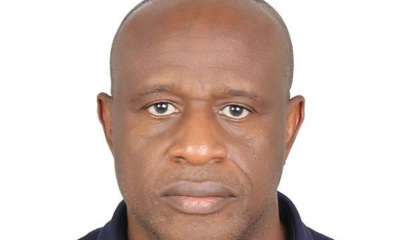
According to ECOWAS Director of Youth and Sports, Amb. Francis Njoaguani, who also serves as the Chairman of the Main Organizing Committee, the first West African runner to cross the finish line will receive $1,000.
The second-place finisher will earn $500, while the third, fourth, and fifth-place runners will receive $400, $250, and $200, respectively.
This initiative is aimed at encouraging regional participation and celebrating homegrown talent.
Njoaguani emphasized ECOWAS’ long-term vision to elevate the marathon to international prominence.
He stated that the goal is to achieve the World Athletics Gold Label status within the next four years, positioning the ECOWAS Abuja International Marathon among the most prestigious road races globally.
Currently, the marathon stands as the most lucrative half marathon in Africa, offering an impressive prize structure for both men and women.
Winners of the 21km race will each take home $10,000, while second and third-place finishers will earn $5,000 and $4,000, respectively.
The fourth-place runner will receive $3,500, followed by $3,000 for the fifth, $2,500 for the sixth, $2,000 for the seventh, $1,500 for the eighth, $1,200 for the ninth, and $1,000 for the tenth-place finisher.
In the 5km category, the first-place winner will receive $1,000, the second-place finisher $300, the third-place $250, the fourth-place $150, and the fifth-place $100.
Njoaguani expressed his delight at the marathon’s rapid growth and increasing popularity. He recalled the challenges faced in its early years but noted that it has since evolved into a highly anticipated sporting event.
The 2025 edition, which commemorates the 50th anniversary of ECOWAS, is expected to attract over 5000 runners from across the globe.
To mark this milestone, ECOWAS is fully sponsoring runners from all member states, both men and women, to participate.
Additionally, significant interest has been shown by runners from Ghana, Senegal, Guinea, and Côte d’Ivoire, as well as from other regions beyond Africa, including the United States, Kenya, Ethiopia, and Switzerland.
For this edition, some minor adjustments have been made to the race routes.
The 21km race will begin and end at the ECOWAS Commission headquarters, ensuring a seamless and well-coordinated course for participants.
Meanwhile, the 5km race will start Independence Drive by Sahad Stores and CDB and conclude at the ECOWAS Commission.
Beyond its competitive aspect, the marathon serves as a unifying platform for West African nations. Njoaguani highlighted that the marathon is more than just a race, emphasizing that it is a means of fostering regional integration, bringing people together to interact, celebrate fitness, and strengthen the bonds within the community.




7th U-13 JOF Kids Cup: Teams Record Victories As Preliminary Round Hots Up Across Centres

Iwobi Warns Liverpool: “Osimhen Airways” Ready for Takeoff at Anfield

Senegal Take CAF to Court Over “Unacceptable” AFCON Title Decision

CAF’s AFCON Title Decision Sparks Legal Controversy Over Laws of the Game

TRIBUTE: Goodbye Henry Nwosu

Thierry Henry Coins “Braino Fernandes” After Man Utd Captain Dominates Aston Villa
-

 News3 days ago
Police Conference: Organiser Debunks Funds Diversion Story, Says Sponsors Bankrolled Event Since First Edition
-
 World Cup 20263 hours ago
CAF’s AFCON Title Decision Sparks Legal Controversy Over Laws of the Game
-
News14 hours ago
TRIBUTE: Goodbye Henry Nwosu
-
World Cup 20261 day ago
FIFA Confirms DR Congo Over Nigeria for 2026 World Cup Play-Offs
-
Premier League1 day ago
Thierry Henry Coins “Braino Fernandes” After Man Utd Captain Dominates Aston Villa
-
Local News1 day ago
Akor Adams Credits Super Eagles Experience for Boosting Confidence at Sevilla
-
AFCON 20252 hours ago
Senegal Take CAF to Court Over “Unacceptable” AFCON Title Decision
-
CHAMPIONS LEAGUE1 hour ago
Iwobi Warns Liverpool: “Osimhen Airways” Ready for Takeoff at Anfield